The phrase “pound sand” is a popular slang expression often used in casual conversations, arguments, movies, workplaces, and online discussions. Many people search for “pound sand meaning” because they hear it in conversations or social media but are unsure about its true interpretation.
While it may sound harmless at first, the phrase usually carries a dismissive or insulting tone. It is commonly used when someone wants another person to leave, stop bothering them, or go waste time doing something pointless.
The expression has become widely recognized in American slang and internet culture. Depending on the situation, it can sound humorous, sarcastic, rude, or aggressive. Understanding the phrase requires looking at its history, emotional tone, cultural usage, and modern examples.
This article explains everything about “pound sand meaning,” including where it came from, how it is used today, examples in conversations, and why people continue using it in both real life and online communication.
What Does Pound Sand Mean?
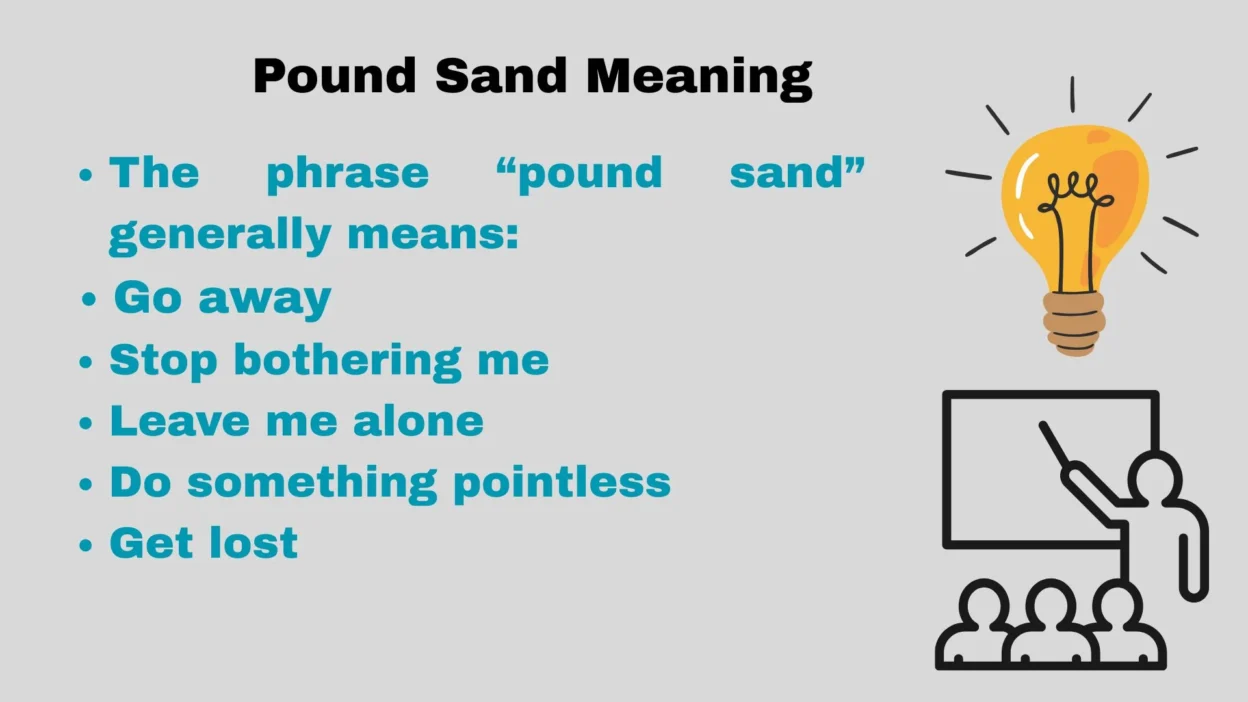
The phrase “pound sand” generally means:
- Go away
- Stop bothering me
- Leave me alone
- Do something pointless
- Get lost
When someone tells another person to “go pound sand,” they are usually dismissing them in an unfriendly or sarcastic manner. The phrase implies that the other person’s request, opinion, or presence is unwanted.
Simple Definition
“Pound sand” is an informal slang expression used to reject or dismiss someone rudely.
Example
Person A: “Can you lend me money again?”
Person B: “No. Go pound sand.”
In this example, Person B is strongly refusing the request and showing annoyance.
Origin of Pound Sand
The exact origin of “pound sand” is unclear, but historians and language experts believe it became popular in the United States during the 19th and early 20th centuries. The phrase likely developed from hard labor activities involving sand, construction, or military work.
The idea behind the expression is that pounding sand is a useless, meaningless task. Since sand naturally shifts and moves, hitting or pounding it accomplishes very little. Over time, people began using the phrase metaphorically to tell someone to go waste their time elsewhere.
Military Connection
Some believe soldiers used the phrase casually to dismiss complaints or orders they disliked. Military slang often creates tough and direct expressions, which may explain the phrase’s harsh tone.
Construction Theory
Another theory connects the phrase to physical labor jobs involving sand and heavy work. Workers may have used it jokingly to describe pointless assignments.
Regardless of its exact beginning, “pound sand” eventually became a common slang phrase in American English.
Emotional Tone of the Phrase
The tone of “pound sand” depends heavily on context and delivery.
Humorous Tone
Friends may jokingly use it without serious anger.
Example:
“You beat me again in the game? Ah, go pound sand!”
Sarcastic Tone
People often use it sarcastically when rejecting silly ideas.
Example:
“He wanted me to work for free. I told him to pound sand.”
Aggressive Tone
In arguments, the phrase can sound rude or hostile.
Example:
“If you don’t like the rules, go pound sand.”
Because of these different tones, listeners usually judge the meaning through voice, facial expressions, and context.
Is Pound Sand Offensive?
“Pound sand” is not considered profanity, but it can still offend people because it is dismissive and disrespectful. It is milder than swearing but stronger than simply saying “go away.”
When It May Be Acceptable
- Friendly joking
- Casual conversations
- Comedy
- Informal online discussions
When It May Be Inappropriate
- Professional workplaces
- Formal communication
- Customer service situations
- Conversations with strangers
Using the phrase carelessly may create conflict because it implies irritation or rejection.
Popular Variations of Pound Sand
Language changes over time, and slang phrases often develop variations. Some common versions include:
Go Pound Sand
This is the most popular form.
Pound Sand Up a Rope
A harsher and more insulting variation.
Go Kick Rocks
A similar phrase meaning “go away.”
Take a Hike
A softer version with the same general meaning.
These expressions all communicate dismissal, though some are more aggressive than others.
Pound Sand in Pop Culture
The phrase appears frequently in movies, TV shows, podcasts, sports interviews, and social media posts. It is especially common in comedy because it sounds colorful and dramatic without using explicit profanity.
In Movies and TV
Characters often say “go pound sand” during arguments or sarcastic exchanges.
In Sports
Athletes and coaches sometimes use it jokingly when discussing critics or rivals.
Online Usage
Internet users use the phrase in memes, comment sections, and debates to dismiss opinions quickly.
Because it sounds old-fashioned yet humorous, the expression continues to survive in modern slang culture.
Examples of Pound Sand in Daily Life
Workplace Example
Employee: “Can you finish my project too?”
Coworker: “No, go pound sand.”
Family Example
Sibling: “Give me your dessert.”
Other sibling: “Pound sand.”
Online Example
User 1: “You should quit your hobby.”
User 2: “You can go pound sand.”
These examples show how the phrase expresses annoyance or refusal.
Why People Use the Phrase
People use “pound sand” because it is:
- Direct
- Memorable
- Slightly humorous
- Less vulgar than swearing
- Emotionally expressive
It allows speakers to reject someone strongly without using extremely offensive language.
The phrase also has a rugged, old-school American slang feeling that many people enjoy.
Similar Slang Expressions
Several slang phrases carry meanings close to “pound sand.”
Get Lost
A direct dismissal.
Buzz Off
A casual way to tell someone to leave.
Take a Hike
Suggests someone should go away.
Drop Dead
A much harsher variation.
Beat It
Popularized in movies and music culture.
Each phrase varies in intensity, but all communicate rejection or annoyance.
How to Respond When Someone Says Pound Sand
If someone tells you to “go pound sand,” their intention is usually clear: they want to end the conversation or reject your request.
Possible responses include:
- Ignoring the comment
- Laughing if it was joking
- Asking for clarification
- Responding calmly instead of escalating conflict
Understanding tone is important because the phrase may be playful or genuinely hostile.
Modern Internet Culture and Slang
Internet culture helps old slang phrases survive. “Pound sand” remains popular because it sounds funny, dramatic, and expressive without breaking content rules on many platforms.
Social media users often prefer creative insults or dismissive phrases over explicit profanity. As a result, older expressions like “pound sand” continue gaining attention among younger audiences online.
The phrase also works well in memes and sarcastic posts because it immediately communicates irritation or rejection.
Conclusion
Understanding “pound sand meaning” helps explain why this phrase remains popular in modern conversations and internet culture. Although the expression is not considered profanity, it carries a dismissive tone and is often used to reject someone, tell them to go away, or express frustration.
Its origins likely connect to pointless physical labor, which helped shape its symbolic meaning over time.
Today, “go pound sand” appears in movies, workplaces, sports discussions, and online arguments.
Depending on tone and context, it can sound playful, sarcastic, or rude. Because it is colorful and memorable, the phrase continues to survive as a recognizable piece of American slang.

I’m Silas Everhart, a storyteller who loves weaving tales that linger in the mind.
Through lushystories.com, I share my journeys into passion, mystery, and imagination.
Every story I write is a piece of my soul, hoping to connect with readers worldwide.