
Many people check their bank accounts and notice two different amounts: the available balance and the ledger balance. This often creates confusion, especially when the numbers do not match. Understanding the ledger balance meaning is important because it helps individuals and businesses manage money accurately, avoid overdrafts, and track financial records properly.
In simple terms, the ledger balance is the amount of money in an account at the end of a business day after all completed transactions have been recorded. It reflects official transactions that have already been processed by the bank or accounting system. Unlike the available balance, it may not include pending payments, recent deposits, or transactions still being processed.
The term is commonly used in banking, accounting, bookkeeping, and financial management. Whether you are handling a personal savings account, running a business, or studying accounting principles, knowing how ledger balances work can help you understand your true financial position.
This detailed guide explains the meaning of ledger balance, how it works, its importance, examples, differences from available balance, and how businesses use it in accounting systems.
What Is Ledger Balance?
The ledger balance refers to the official balance in a bank account or accounting ledger after all processed transactions have been entered and settled. It is usually calculated at the close of each business day.
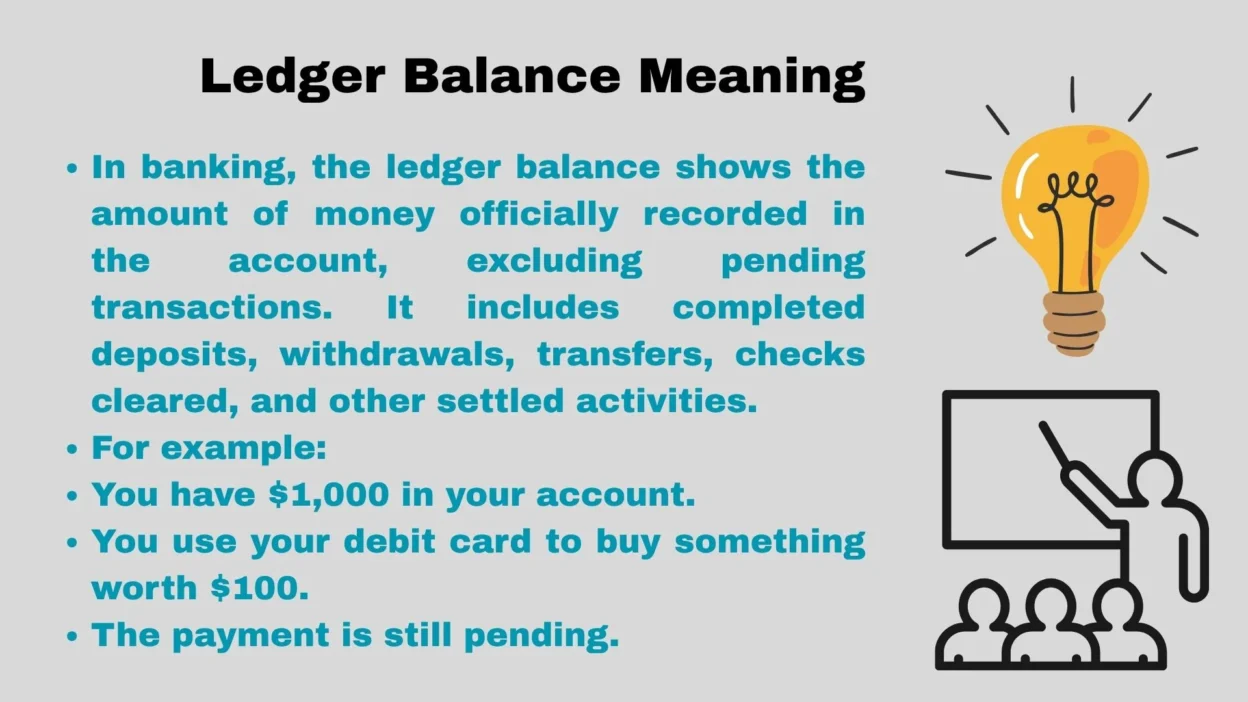
In banking, the ledger balance shows the amount of money officially recorded in the account, excluding pending transactions. It includes completed deposits, withdrawals, transfers, checks cleared, and other settled activities.
For example:
- You have $1,000 in your account.
- You use your debit card to buy something worth $100.
- The payment is still pending.
Your ledger balance may still show $1,000 because the transaction has not officially cleared yet. However, your available balance may show $900.
This difference helps explain why ledger balance and available balance are not always the same.
Understanding the Origin of the Term “Ledger”
The word “ledger” comes from traditional bookkeeping systems. A ledger is a book or digital record used to store financial transactions.
In accounting, every transaction is entered into specific accounts within a ledger, such as:
- Cash account
- Sales account
- Expense account
- Accounts payable
- Accounts receivable
The ledger keeps a permanent record of all financial activity. Therefore, the ledger balance represents the final recorded amount after entries have been posted.
Modern banks and accounting software now use digital ledgers instead of physical books, but the concept remains the same.
How Ledger Balance Works in Banking
Banks process transactions throughout the day. Some transactions settle immediately, while others may take time.
At the end of the business day, the bank calculates the ledger balance using all fully processed transactions.
The ledger balance generally includes:
- Cleared deposits
- Processed withdrawals
- Completed transfers
- Settled debit card purchases
- Cleared checks
It usually does not include:
- Pending card transactions
- Unprocessed checks
- Temporary holds
- Pending deposits
Because of this delay, the ledger balance may not always represent the exact amount you can spend immediately.
Difference Between Ledger Balance and Available Balance
Ledger Balance
The ledger balance is the official balance recorded after completed transactions are posted.
Available Balance
The available balance is the amount of money you can currently use for spending, withdrawals, or transfers.
Key Differences
| Feature | Ledger Balance | Available Balance |
|---|---|---|
| Includes settled transactions | Yes | Yes |
| Includes pending transactions | Usually no | Yes |
| Updated | End of business day | Real-time or frequently |
| Spending accuracy | Less immediate | More immediate |
| Used for official records | Yes | Mostly for customer access |
For daily spending decisions, the available balance is often more useful. For accounting and official records, the ledger balance is important.
Example of Ledger Balance
Imagine the following activity in a checking account:
Starting Balance
$2,000
Transactions During the Day
- Salary deposit: +$500
- Grocery purchase pending: -$150
- ATM withdrawal completed: -$200
- Online transfer completed: -$300
Ledger Balance
The pending grocery purchase is not fully processed yet.
So the ledger balance becomes:
$2,000 + $500 – $200 – $300 = $2,000
Available Balance
The bank also considers the pending grocery purchase.
$2,000 – $150 = $1,850
This example clearly shows why the two balances differ.
Importance of Ledger Balance
Understanding ledger balance is essential for proper financial management.
Helps Track Official Account Records
The ledger balance reflects finalized transactions, making it useful for official bank statements and accounting reports.
Useful for Businesses
Companies use ledger balances to prepare financial statements, reconcile accounts, and monitor cash flow.
Prevents Financial Errors
Knowing the difference between ledger and available balances helps prevent accidental overspending.
Supports Accounting Accuracy
Ledger balances ensure that every transaction is recorded properly within the accounting system.
Ledger Balance in Accounting
In accounting, ledger balance has a broader meaning beyond banking.
Every business maintains a general ledger containing all financial accounts. Each account shows:
- Beginning balance
- Debit entries
- Credit entries
- Ending balance
The ending amount becomes the ledger balance for that account.
For example, a company’s cash ledger may look like this:
| Transaction | Debit | Credit | Balance |
|---|---|---|---|
| Opening Balance | $10,000 | ||
| Customer Payment | $2,000 | $12,000 | |
| Office Rent | $1,500 | $10,500 |
The final amount, $10,500, is the ledger balance.
Types of Ledger Balances
Bank Ledger Balance
Shows the official amount in a bank account after cleared transactions.
General Ledger Balance
Represents balances in accounting records for different financial accounts.
Credit Card Ledger Balance
Indicates the total posted charges and payments on a credit card account.
Business Ledger Balance
Used by businesses to monitor revenues, expenses, liabilities, and assets.
Why Ledger Balance May Be Incorrect Sometimes
There are situations where the ledger balance may seem inaccurate.
Pending Transactions
Transactions not fully processed can create temporary differences.
Bank Delays
Banks may take time to clear checks or deposits.
Technical Errors
Occasionally, system errors or duplicate entries may affect balances.
Fraudulent Activity
Unauthorized transactions can create unexpected changes.
Regular account monitoring helps identify issues early.
How to Check Ledger Balance
You can usually check your ledger balance through:
- Mobile banking apps
- Online banking portals
- ATM receipts
- Bank statements
- Customer support
- Accounting software
Banks often display both ledger balance and available balance together.
Ledger Balance vs Current Balance
Some banks also use the term “current balance.”
Current Balance
The current balance includes all recent activity, including pending transactions.
Ledger Balance
The ledger balance only includes officially settled transactions.
The exact definitions may vary slightly depending on the bank.
Common Misunderstandings About Ledger Balance
“Ledger Balance Is Always Spendable”
Not necessarily. Some pending transactions may reduce your available funds.
“Ledger Balance Updates Instantly”
Most banks update ledger balances after transaction settlement, not instantly.
“Ledger Balance and Available Balance Are the Same”
They are often different because of pending activities.
Benefits of Understanding Ledger Balance
Better Budgeting
You can track your true financial position more accurately.
Improved Financial Planning
Understanding account balances helps avoid payment issues.
Reduced Overdraft Risk
Knowing which balance to trust prevents overspending.
Accurate Record Keeping
Businesses rely on ledger balances for bookkeeping and tax reporting.
Ledger Balance in Digital Banking
Modern digital banking systems process transactions much faster than traditional banks. However, pending transaction delays still exist.
Many banking apps now show:
- Pending transactions
- Cleared transactions
- Available balance
- Ledger balance
This gives users a clearer picture of their finances.
How Businesses Reconcile Ledger Balances
Businesses regularly compare ledger balances with bank statements in a process called bank reconciliation.
This process helps:
- Detect errors
- Identify fraud
- Verify transactions
- Maintain accurate financial records
Reconciliation is an important accounting practice for organizations of all sizes.
Final Thoughts
The ledger balance meaning becomes easier to understand once you know that it represents the official recorded balance after processed transactions are settled. It is an essential concept in both banking and accounting because it provides a reliable financial snapshot based on completed activity.
Although the ledger balance may differ from the available balance, both serve important purposes. The ledger balance supports accurate record keeping and official reporting, while the available balance helps manage everyday spending.
If you are an individual checking your bank account or a business handling financial statements, understanding ledger balances can improve money management, reduce errors, and strengthen financial awareness.

I am Luna Marlowe, a creative soul drawn to stories, art, and the quiet emotional spaces people rarely name.
My life has been shaped by observation and imagination, turning everyday moments into meaning through words and reflection.
I share my work and stories on lushystories.com, believing self-expression is both a refuge and a way to connect deeply with others.