If you have ever checked your bank statement and noticed a mysterious charge labeled “NSF fee,” you are not alone. Many people search for the meaning of this term after seeing unexpected banking charges or hearing it mentioned online.
The phrase can sound technical or confusing, especially for people who are new to banking, digital payments, or financial terms.
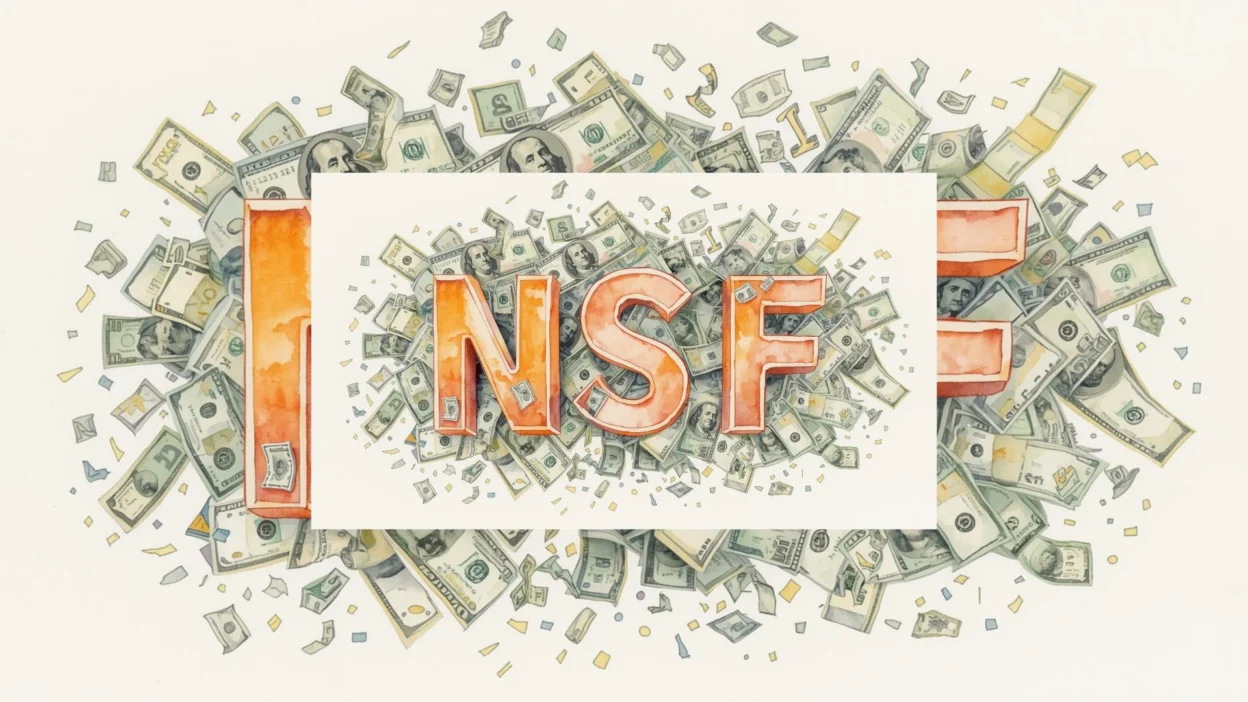
In most situations, NSF fee meaning refers to “Non-Sufficient Funds fee.” It is a charge banks apply when there is not enough money in your account to cover a payment, withdrawal, or check.
However, the abbreviation “NSF” can also have completely different meanings depending on the context. On social media, in chat conversations, medical fields, physics, and even aircraft terminology, NSF may stand for other things entirely.
Understanding the different uses of NSF helps avoid confusion in conversations, banking matters, and online communication. This guide explains the meaning, history, usage, misconceptions, and relevance of the term in simple language.
Meaning & Definition of NSF Fee
The most common NSF fee meaning is “Non-Sufficient Funds fee.” This fee happens when your bank account does not contain enough money to complete a transaction.
For example, imagine you have only $20 in your account, but an automatic bill payment of $50 is processed. Since your balance is too low, the bank may reject the payment and charge you an NSF fee.
Banks usually apply these charges in situations like:
- Bounced checks
- Failed automatic payments
- Debit card transactions
- Online bill payments
- Electronic transfers
An NSF fee is sometimes called a “bounced check fee” or “returned item fee.” The exact amount depends on the bank, but it often ranges between $20 and $40.
The term is commonly seen in:
- Banking apps
- Monthly statements
- Financial emails
- Credit card alerts
- Online banking portals
The word “non-sufficient” simply means “not enough.” Therefore, the full phrase literally means there were not enough funds available.
People often confuse NSF fees with overdraft fees. While they are related, they are not always the same thing. An overdraft happens when the bank allows the transaction to go through even though your account balance is too low. An NSF fee usually occurs when the bank declines the transaction entirely.
In everyday conversation, people may say:
- “My payment bounced because of an NSF fee.”
- “I got charged for non-sufficient funds.”
- “The bank rejected my check due to NSF.”
Because online banking has become more common, searches for NSF fee meaning have increased significantly over the years.
Background of NSF Fees
The concept behind NSF fees has existed for decades. Before digital banking, checks were one of the most common payment methods. If someone wrote a check without enough money in their account, the bank would return it unpaid.
Processing these failed payments required manual work from bank employees. To cover administrative costs, banks introduced NSF charges.
Over time, banking systems became electronic, but the fees remained. Today, NSF fees are connected to:
- Debit card purchases
- Subscription services
- Utility payments
- Mobile banking transactions
- Automatic withdrawals
In the past, bounced checks could damage someone’s reputation because businesses relied heavily on paper payments. Now, digital notifications make the process quicker, but the financial impact still exists.
Some countries regulate NSF fees more strictly than others. In recent years, consumer advocates have criticized banks for charging high fees, especially to people already struggling financially. As a result, some banks have reduced or eliminated these charges.
The phrase also appears in legal and financial documents. Businesses use it when discussing unpaid invoices or failed transactions. Employers, landlords, and service providers may also mention NSF issues when payments fail.
Beyond finance, the abbreviation “NSF” gained other meanings in science, medicine, and online communication. Because abbreviations are short and convenient, they often develop multiple interpretations across industries.
That is why context matters. A bank statement and a TikTok comment using “NSF” may mean completely different things.
Usage in Different Contexts
The meaning of NSF changes depending on where it appears. Understanding the context helps determine the correct interpretation.
Banking & Finance
In financial settings, NSF almost always means “Non-Sufficient Funds.”
Examples:
- “Your payment was returned NSF.”
- “The account incurred an NSF fee.”
- “Avoid NSF charges by maintaining a higher balance.”
Professional Fields
Businesses often use the term in accounting or payroll discussions.
Examples:
- “The client’s payment came back NSF.”
- “Please resubmit payment after resolving the NSF issue.”
Social Media & Internet Slang
Online, abbreviations evolve quickly. Some people use NSF casually in memes, chats, or captions, though the banking meaning still dominates.
Users may joke about:
- Being broke
- Failed purchases
- Declined cards
- Empty bank accounts
Academic & Government Use
NSF may also refer to organizations such as the National Science Foundation in the United States. In educational or scientific discussions, this meaning is very common.
Example:
- “The research project received NSF funding.”
This demonstrates why abbreviations can easily confuse readers if the context is unclear.
Meaning in Chat, WhatsApp, Instagram, and TikTok
On social media platforms like WhatsApp, Instagram, and TikTok, NSF usually still relates to money problems or failed payments.
People use it humorously when discussing:
- Declined cards
- Shopping addiction
- Being broke before payday
- Failed online orders
Examples include:
- “Tried ordering food again… NSF fee hit me.”
- “My account says NSF, so no weekend plans.”
- “Online shopping got me another NSF charge.”
In chats and texting, abbreviations save time, so users often shorten phrases instead of writing full explanations.
On dating apps, mentioning NSF fees may symbolize financial stress or poor money management. Some users joke about avoiding expensive dates because their bank account is “NSF.”
Memes involving NSF often focus on relatable financial struggles faced by students, young adults, or online shoppers.
Despite the humor, repeated NSF fees can be a serious financial issue in real life.
Meaning in Physics, Medical, and Aircraft Terminology
The abbreviation NSF is not limited to banking.
Physics & Science
In scientific discussions, NSF often refers to the National Science Foundation, a major organization that funds research and education projects.
Scientists may say:
- “The study was supported by NSF.”
- “NSF grants funded the research.”
Medical Meaning
In medicine, NSF can stand for “Nephrogenic Systemic Fibrosis,” a rare disease linked to certain MRI contrast agents in patients with kidney problems.
Medical example:
- “The doctor discussed risks related to NSF.”
This meaning is highly specialized and usually appears only in healthcare settings.
Aircraft & Aviation Meaning
In aviation or aircraft maintenance, abbreviations similar to NSF may appear in technical documentation, though usage varies by organization.
Pilots and engineers rely heavily on shorthand terminology for communication efficiency. Because aviation language is technical, abbreviations must be interpreted carefully to avoid mistakes.
These multiple meanings show why understanding context is extremely important whenever you encounter the term NSF.
Common Misconceptions About NSF Fees
Many people misunderstand NSF fees. One common myth is that the bank “steals” money randomly. In reality, the fee is tied to a failed transaction caused by insufficient funds.
Another misconception is that NSF and overdraft fees are identical. They are related but different:
- NSF fee = transaction declined
- Overdraft fee = transaction approved despite low balance
Some people also believe NSF fees only happen with paper checks. Modern digital banking proves otherwise. Automatic subscriptions, streaming services, and online purchases can all trigger NSF charges.
Another misunderstanding is that one failed payment causes only one fee. In some cases, multiple failed transactions can create several NSF charges in a short period.
People also incorrectly assume an NSF fee damages credit scores automatically. Usually, the fee itself does not affect credit directly unless the unpaid balance eventually goes to collections.
Understanding these misconceptions helps consumers manage their finances more effectively.
Similar Terms & Alternatives
Several financial terms are closely related to NSF fee meaning.
Common alternatives include:
- Returned payment fee
- Bounced check fee
- Declined payment charge
- Insufficient funds fee
- Returned item fee
Similar banking terms include:
- Overdraft fee
- Late payment fee
- Service charge
- Account penalty fee
Although these terms sound similar, each has a slightly different meaning depending on the situation.
For example:
- An overdraft allows the payment to proceed.
- An NSF usually blocks the payment.
- A late fee comes from missing a due date.
Knowing these differences helps avoid confusion when reading bank statements or contracts.
How to Respond to an NSF Fee
If you receive an NSF fee, the first step is not to panic. These situations are common and can usually be resolved quickly.
Here are practical steps to take:
Check Your Account Balance
Review recent transactions to identify what caused the failed payment.
Deposit Funds Quickly
Adding money to your account may prevent additional penalties.
Contact the Bank
Some banks reverse first-time NSF fees as a courtesy, especially for long-term customers.
Notify the Payment Receiver
If rent, utilities, or subscriptions were affected, inform the company about the issue.
Set Up Alerts
Mobile banking alerts can warn you when balances become low.
Track Automatic Payments
Many NSF fees happen because users forget recurring subscriptions.
Good financial habits can reduce the risk of future charges.
Differences From Similar Words
NSF is often confused with other abbreviations or financial expressions.
NSF vs Overdraft
- NSF = payment rejected
- Overdraft = payment approved temporarily
NSF vs Insufficient Balance
“Insufficient balance” is a general description, while NSF is the official banking term.
NSF vs Returned Check
A returned check is the result, while NSF is the reason.
NSF vs Declined Transaction
Declined transactions may happen for other reasons besides low funds, such as fraud protection or expired cards.
These distinctions matter in banking, legal discussions, and customer service conversations.
Relevance in Online Conversations & Dating Apps
Money discussions have become increasingly common online, especially in memes, dating culture, and lifestyle content.
On dating apps, people may joke about:
- “NSF before payday”
- “My wallet says no”
- “Date night canceled due to NSF”
While humorous, these conversations often reflect real financial stress among younger adults.
In online communities, NSF references symbolize:
- Living paycheck to paycheck
- Overspending
- Subscription overload
- Financial anxiety
The term has become part of internet culture because it represents a relatable experience. Short abbreviations like NSF spread quickly on social media because they are easy to type and instantly recognizable.
At the same time, financial literacy content creators use the phrase to educate followers about budgeting, saving, and avoiding unnecessary bank fees.
Conclusion
Understanding NSF fee meaning is important because the term appears in banking, online conversations, professional settings, and even scientific or medical discussions. In most cases, NSF refers to “Non-Sufficient Funds,” meaning there was not enough money available to complete a transaction. These fees commonly occur with bounced checks, failed subscriptions, or declined payments.
However, NSF can also represent other concepts, such as the National Science Foundation in research settings or medical terminology in healthcare discussions. That is why context always matters.
As digital banking and online communication continue growing, abbreviations like NSF are becoming more visible in everyday life. Knowing the different meanings helps people avoid confusion, manage finances better, and understand conversations both online and offline.
If you encounter NSF on a bank statement, a TikTok meme, or a professional document, you can now recognize what it means and how it is used.

I’m Jasper Wren, a storyteller fascinated by the shadows between desire and curiosity. I craft tales that linger long after the last word. Explore my world and latest stories at LushyStories.