The phrase “god complex” is often used to describe someone who believes they are always right, superior to others, or impossible to fail. In modern conversations, people use this term when talking about controlling bosses, arrogant leaders, celebrities, fictional villains, or even highly confident individuals who think normal rules do not apply to them.
While the expression sounds dramatic, it carries important psychological and social meanings.
Many people search for “god complex meaning” because they want to understand toxic behavior, extreme confidence, narcissistic traits, or unhealthy power dynamics.
Sometimes the term is used casually online, while other times it points toward serious emotional and personality issues. Understanding the difference is important because not every confident person has a god complex.
A god complex usually involves excessive self-importance, a strong need for admiration, difficulty accepting criticism, and a belief that one’s judgment is superior to everyone else’s. People with these traits may manipulate others, ignore boundaries, or act as though they are untouchable. The concept is closely linked to psychology, ego, narcissism, and power.
This detailed guide explains the god complex meaning, its psychological background, common signs, causes, examples, and effects on relationships, work, and society.
What Does God Complex Mean?
A god complex refers to an exaggerated belief in one’s own importance, abilities, intelligence, or power. A person with a god complex may behave as though they are superior to everyone around them and deserve special treatment. They often believe their opinions are absolute truths and may dismiss anyone who disagrees with them.
The term is not always an official medical diagnosis. Instead, it is commonly used in psychology discussions and everyday language to describe extreme arrogance or superiority behavior. Someone with a god complex may feel emotionally above rules, laws, ethics, or social expectations.
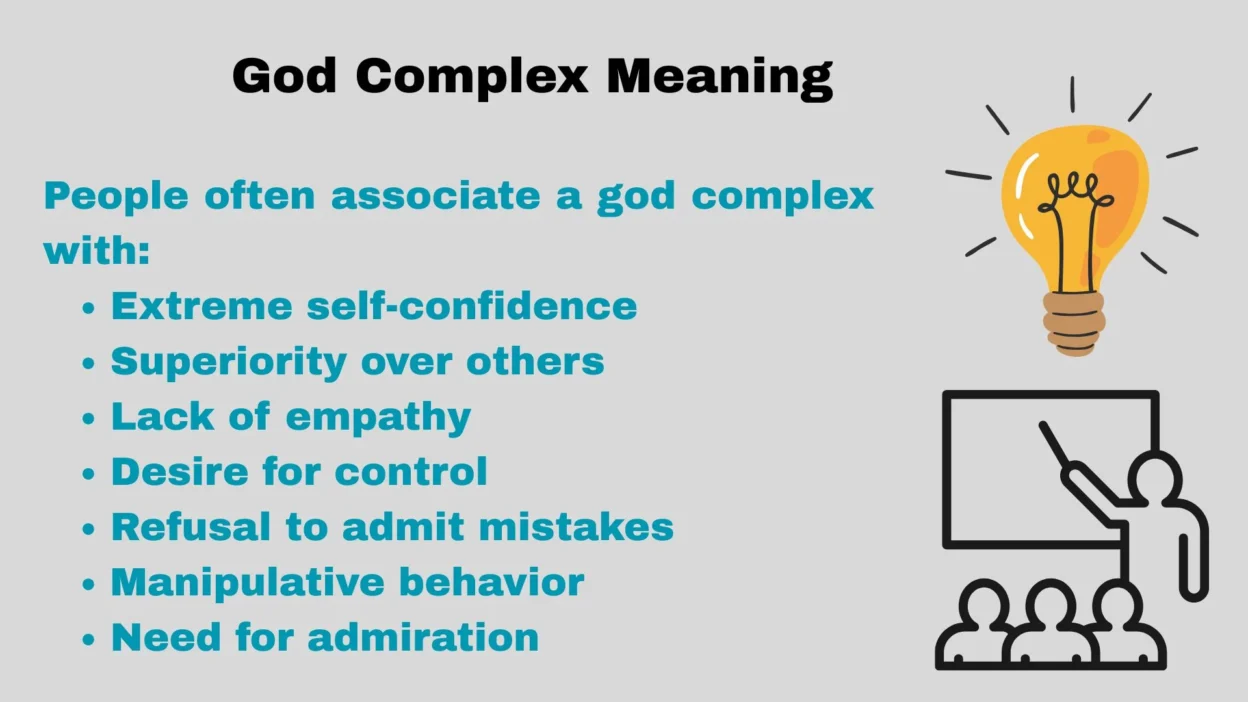
People often associate a god complex with:
- Extreme self-confidence
- Superiority over others
- Lack of empathy
- Desire for control
- Refusal to admit mistakes
- Manipulative behavior
- Need for admiration
In severe situations, this mindset can damage personal relationships, workplaces, and communities because the individual may become controlling or emotionally abusive.
Origin of the Term God Complex
The phrase “god complex” became popular through psychology discussions and pop culture. It describes people who act as though they possess god-like authority, wisdom, or perfection. The term gained wider attention through films, literature, political discussions, and medical psychology.
Historically, powerful rulers, dictators, and leaders were sometimes described as having a god complex because they believed they were above ordinary people. In modern times, the term is also used for fictional characters who seek unlimited power or control.
Psychologists often connect the concept to narcissistic tendencies, inflated ego, or superiority complexes. However, the phrase itself is more informal than clinical.
God Complex in Psychology
Connection to Narcissism
One of the strongest psychological links to a god complex is narcissism. Narcissistic traits include excessive self-love, admiration seeking, and lack of empathy. A person with a god complex may show many narcissistic behaviors, especially grandiosity.
However, not every narcissistic person has a full god complex. The difference usually lies in the intensity of superiority and control.
Superiority Complex
A superiority complex happens when someone constantly acts better than others to hide deep insecurities. In some cases, a god complex can develop from hidden emotional weakness or fear of failure.
The person may appear powerful on the outside while secretly struggling with self-worth inside.
Delusions of Grandeur
In rare and severe mental health cases, a god complex can involve delusions of grandeur. This means a person truly believes they possess supernatural power, divine authority, or unlimited intelligence. Such beliefs may appear in certain psychiatric disorders and require professional treatment.
Signs of a God Complex
Constant Need to Be Right
People with a god complex often refuse to accept criticism. Even when clearly wrong, they may argue endlessly to protect their image of superiority.
Looking Down on Others
They may insult, belittle, or underestimate people they consider less intelligent, less successful, or less powerful.
Manipulative Behavior
Some individuals manipulate emotions, relationships, or situations to maintain control and dominance.
Lack of Empathy
A major sign is difficulty understanding or caring about other people’s feelings. Their own needs usually come first.
Desire for Power
People with a god complex often seek positions where they can control others, such as leadership roles or authority positions.
Difficulty Accepting Failure
Failure threatens their self-image, so they may blame others instead of admitting mistakes.
Belief That Rules Do Not Apply to Them
They may ignore laws, boundaries, or ethical standards because they believe they are exceptional.
Causes of a God Complex
Childhood Experiences
Some experts believe overpraise during childhood can create unrealistic self-importance. Others suggest emotional neglect may cause a person to build a false image of superiority for protection.
Power and Success
Fame, wealth, authority, or repeated success can sometimes inflate ego. People surrounded by constant praise may slowly lose touch with humility.
Deep Insecurity
Ironically, some individuals develop a god complex because they feel insecure inside. Acting superior becomes a defense mechanism.
Personality Disorders
Certain personality disorders, especially narcissistic personality disorder, may involve behaviors similar to a god complex.
Social Environment
Competitive environments that reward dominance and arrogance can strengthen these traits over time.
God Complex in Relationships
A god complex can seriously damage relationships. Romantic partners, friends, family members, and coworkers may feel emotionally exhausted around someone who constantly demands control and admiration.
Common relationship problems include:
- Emotional manipulation
- Lack of listening
- Constant criticism
- Jealousy
- Control issues
- Refusal to compromise
Over time, the other person may lose confidence, independence, or emotional peace.
God Complex at Work
In workplaces, a god complex may appear in bosses, managers, business owners, or employees who think they are more valuable than everyone else.
This can create:
- Toxic work environments
- Fear among employees
- Poor teamwork
- Unhealthy competition
- Abuse of authority
Some highly successful professionals, especially in powerful industries, may develop inflated self-importance if nobody challenges their behavior.
God Complex in Pop Culture
Movies, anime, TV shows, and books frequently feature characters with a god complex. These characters often seek absolute control or believe they alone can “save” the world.
Examples include:
- Villains wanting ultimate power
- Genius characters believing they are superior
- Leaders obsessed with control
- Antiheroes who think morality does not apply to them
Such characters attract audiences because they reflect dangerous extremes of ego and ambition.
Difference Between Confidence and God Complex
Healthy Confidence
Healthy confidence means believing in your abilities while still respecting others. Confident people can admit mistakes, learn, and cooperate.
God Complex
A god complex goes beyond confidence. It involves arrogance, superiority, control, and refusal to accept limits.
Confidence says:
“I believe in myself.”
A god complex says:
“I am better than everyone.”
Can a God Complex Be Treated?
Yes, improvement is possible if the person recognizes their behavior and wants to change. Therapy can help individuals understand emotional patterns, insecurities, and unhealthy thinking habits.
Common Treatment Approaches
Cognitive Behavioral Therapy (CBT)
CBT helps people challenge distorted beliefs and develop healthier thinking patterns.
Self-Awareness Training
Learning empathy, accountability, and emotional awareness can reduce toxic behaviors.
Relationship Counseling
Family or couples therapy may help repair damaged communication and trust.
However, treatment becomes difficult if the individual refuses to admit any problem exists.
Effects of a God Complex
A god complex may temporarily create power or admiration, but long-term effects are often negative.
Emotional Effects
- Loneliness
- Anger issues
- Emotional instability
- Insecurity hidden behind ego
Social Effects
- Broken friendships
- Failed relationships
- Workplace conflicts
- Isolation
Professional Effects
Arrogance may eventually damage leadership, teamwork, and reputation.
Why the Term Is Popular Online
The internet frequently uses “god complex” in memes, debates, and social commentary. Social media culture sometimes rewards attention-seeking and exaggerated confidence, causing the phrase to appear more often online.
People also use it jokingly for fictional characters, gamers, influencers, or highly competitive individuals. Still, the term should not always be used lightly because real psychological issues may exist behind certain behaviors.
Common Misunderstandings About God Complex
It Is Not Always a Mental Illness
Having arrogant behavior does not automatically mean someone has a psychological disorder.
Confident People Are Not the Same
Many successful or assertive people are simply confident, not narcissistic or controlling.
The Term Can Be Overused
Online culture sometimes labels anyone confident or ambitious as having a god complex, which can be misleading.
How to Deal With Someone Who Has a God Complex
Set Boundaries
Do not allow manipulation or emotional control to dominate your life.
Avoid Constant Arguments
People with extreme superiority traits rarely accept criticism easily.
Protect Your Self-Esteem
Do not let repeated insults or control affect your confidence.
Encourage Professional Help
If the behavior becomes harmful, therapy may help the person develop healthier emotional patterns.
Final Thoughts
Understanding the god complex meaning helps people recognize unhealthy superiority, emotional manipulation, and toxic power behavior. While confidence and leadership are positive qualities, a god complex pushes those traits into harmful extremes. The mindset often combines arrogance, control, lack of empathy, and refusal to accept limitations.
In psychology, the concept connects closely with narcissism, superiority complexes, and emotional insecurity. If seen in relationships, workplaces, politics, or entertainment, the effects can be damaging when left unchecked.
At the same time, not everyone with strong confidence has a god complex. Healthy confidence respects others, accepts mistakes, and values cooperation. The key difference lies in humility, empathy, and self-awareness.
By learning about the signs, causes, and effects of a god complex, people can better protect their emotional well-being and build healthier relationships with others.

I’m Jasper Wren, a storyteller fascinated by the shadows between desire and curiosity. I craft tales that linger long after the last word. Explore my world and latest stories at LushyStories.