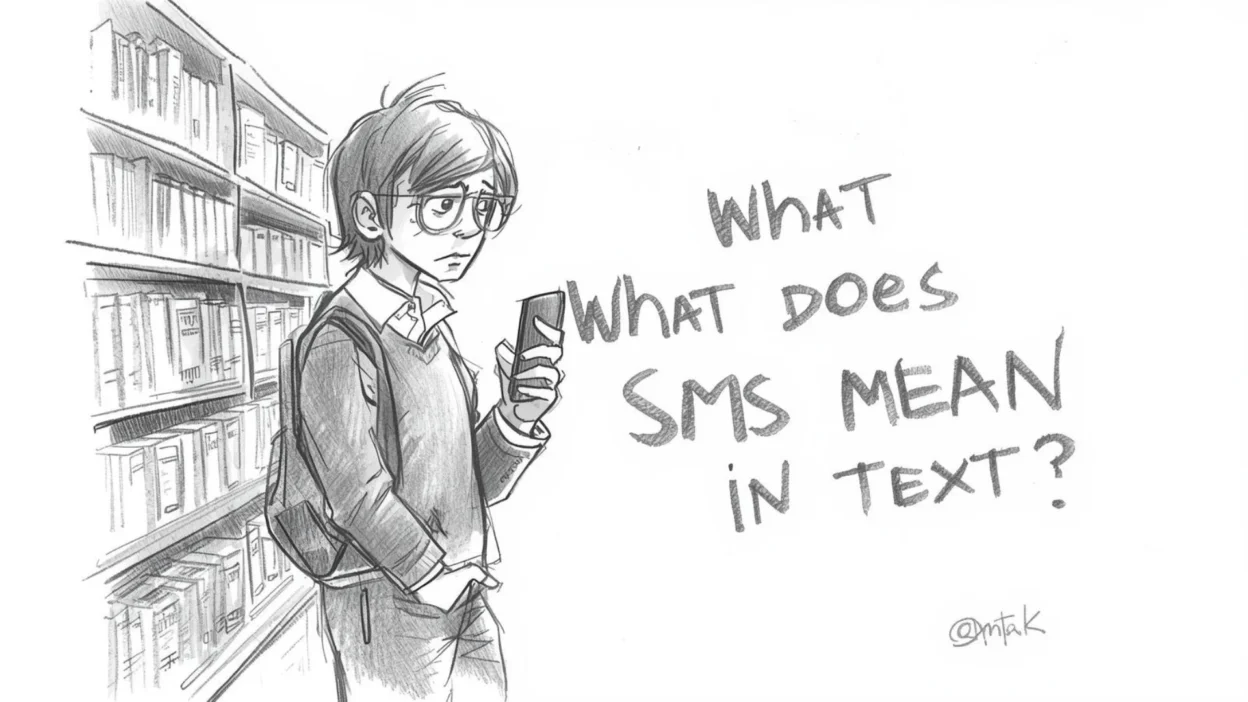
If you’ve ever seen someone mention “SMS” in a conversation or on your phone, you might have wondered what it actually means. While it may seem like just another tech abbreviation, SMS plays a huge role in everyday communication.
From simple text messages between friends to important alerts from banks and businesses, SMS is one of the oldest and most widely used messaging systems in the world. In this article, we’ll break down what SMS means, how it works, its history, and how it’s used today—so you can fully understand it in both casual texting and modern communication.
Meaning & Definition of SMS
SMS stands for Short Message Service. It refers to a type of text messaging service that allows users to send short messages between mobile devices.
Unlike internet-based messaging apps like WhatsApp or Messenger, SMS works through your mobile network (cellular service), not Wi-Fi or data. This makes it more reliable in areas with poor internet connectivity.
Key Features of SMS:
- Limited to 160 characters per message (standard format)
- Works on all mobile phones, including basic ones
- Does not require internet access
- Uses your cellular network
In simple terms, when you send a regular text message from your phone without using an app, you are sending an SMS.
Background & History of SMS
SMS technology dates back to the early 1990s. The first SMS message was sent in 1992 by a British engineer named Neil Papworth. The message simply read: “Merry Christmas.”
At first, SMS was not widely used. Early mobile phones had limited functionality, and texting wasn’t as convenient as calling. However, by the late 1990s and early 2000s, SMS became extremely popular—especially among younger users.
Evolution of SMS:
- 1990s: Basic texting introduced
- Early 2000s: SMS becomes a global communication trend
- Mid-2000s: Text messaging peaks with billions of messages sent daily
- 2010s–Present: SMS competes with messaging apps but remains essential
Even with modern apps, SMS continues to be used for verification codes, alerts, and quick communication.
How SMS Works
SMS works through a system called the cellular network. When you send a message:
- Your phone sends the message to a nearby cell tower
- The message is forwarded to an SMS center (SMSC)
- The SMSC delivers it to the recipient’s phone
This process happens in seconds, which is why SMS feels instant.
Unlike apps that require both users to be online, SMS only needs a mobile signal.
Usage of SMS in Everyday Life
1. Personal Communication
People use SMS to:
- Chat with friends and family
- Send quick updates
- Share important information
Example:
“Hey, I’ll be late today.”
2. Business & Marketing
Companies use SMS for:
- Promotions and discounts
- Appointment reminders
- Customer notifications
Example:
“Your order has been shipped.”
3. Security & Verification
SMS is commonly used for:
- OTP (One-Time Passwords)
- Account verification
- Two-factor authentication (2FA)
Example:
“Your verification code is 482913.”
4. Emergency Alerts
Governments and organizations send SMS alerts for:
- Weather warnings
- Safety notifications
- Emergency updates
SMS vs MMS vs Instant Messaging
SMS
- Text only
- No internet required
- 160-character limit
MMS (Multimedia Messaging Service)
- Supports images, videos, audio
- May require data
- Larger file size
Instant Messaging (WhatsApp, Messenger)
- Requires internet
- Supports media, voice, video calls
- More interactive features
Advantages of SMS
- Works without internet
- Universal compatibility
- Fast and reliable
- Useful for important alerts
Disadvantages of SMS
- Character limit
- No advanced features
- May incur charges
- Less popular among younger users
Common Examples of SMS in Text
Here are a few ways SMS might appear in conversation:
- “Send me an SMS when you arrive.”
- “I didn’t get your SMS.”
- “The bank sent me an SMS alert.”
In each case, SMS simply means a standard text message.
Why SMS Is Still Important Today
Even though messaging apps dominate communication, SMS remains crucial because:
- It works on all devices
- It doesn’t rely on internet access
- It’s trusted for secure communication
Businesses, banks, and governments continue to rely on SMS for critical information delivery.
Conclusion
SMS, or Short Message Service, is one of the most fundamental communication tools in modern technology. While it may seem simple compared to today’s feature-rich messaging apps, its reliability, accessibility, and universal reach keep it relevant.
If you’re sending a quick message to a friend or receiving an important verification code, SMS continues to play a vital role in everyday life.

I’m Jasper Wren, a storyteller fascinated by the shadows between desire and curiosity. I craft tales that linger long after the last word. Explore my world and latest stories at LushyStories.