If you’ve spent any time on TikTok, Instagram, or messaging apps, you’ve probably seen someone comment “ate” under a post—and wondered what it actually means.
The phrase has quickly become a popular piece of internet slang, especially among younger audiences and pop culture communities. People search for the ate slang meaning because, at first glance, it looks like the past tense of “eat,” but in reality, it carries a completely different vibe online.
This trendy expression is often used to praise someone, celebrate confidence, or highlight a standout performance. Whether it’s a fashion look, a dance video, or a clever comment, saying someone “ate” is a form of admiration.
As language evolves rapidly on social media, understanding these slang terms helps you stay relevant and avoid confusion in conversations. In this article, we’ll break down what it means, where it came from, and how to use it naturally in different situations.
Meaning & Definition
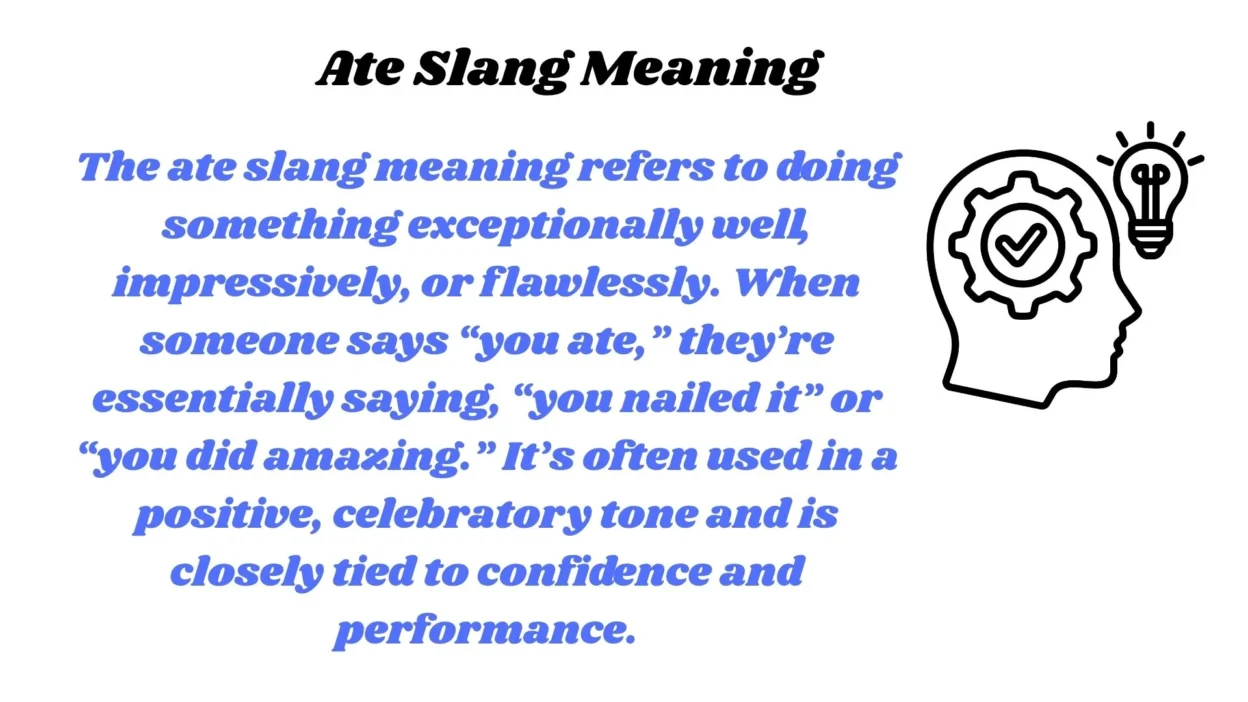
The ate slang meaning refers to doing something exceptionally well, impressively, or flawlessly. When someone says “you ate,” they’re essentially saying, “you nailed it” or “you did amazing.” It’s often used in a positive, celebratory tone and is closely tied to confidence and performance.
The phrase is commonly extended into expressions like:
- “She ate that!”
- “He ate and left no crumbs”
- “You really ate today”
These variations intensify the compliment, suggesting that the person performed so well that nothing could top it. The imagery comes from the idea of consuming something completely—leaving “no crumbs”—which metaphorically translates into giving a perfect performance.
Importantly, this slang is not literal. It has nothing to do with food in most cases. Instead, it’s about excellence, confidence, and impact. It’s especially popular in communities that celebrate creativity, style, and self-expression.
In tone, “ate” is informal, playful, and often enthusiastic. It’s rarely used in serious or formal conversations but thrives in casual, expressive communication. Understanding this meaning helps avoid confusion, especially for those who might interpret it literally.
Background with Examples
The origin of the ate slang meaning can be traced back to African American Vernacular English (AAVE) and ballroom culture, where expressive language has long been used to celebrate performance, style, and individuality. Over time, social media platforms like TikTok and Twitter helped popularize the phrase globally.
In ballroom and drag culture, phrases like “she ate” were used to describe someone who delivered an outstanding performance—whether in dance, fashion, or attitude. As these communities influenced mainstream internet culture, the phrase gained widespread recognition.
Examples of usage include:
- A user posts a makeup transformation → Comment: “You ate this look!”
- Someone shares a dance video → “She ate and left no crumbs 🔥”
- A friend sends a confident selfie → “You really ate today!”
Celebrities and influencers have also played a role in spreading the term. When fans comment “ate” under posts, it reinforces the idea of admiration and approval. Over time, the phrase became part of everyday online language.
This evolution highlights how internet slang often starts within specific communities before becoming mainstream. Knowing its roots also encourages respectful and informed use.
Usage in Different Contexts (Chat, Social Media, Professional Fields)
The ate slang meaning is most commonly used in casual and social settings, but its tone can vary depending on context.
In Chat & Messaging
In personal chats, “ate” is a quick and fun way to compliment someone. For example:
- “That outfit? You ate.”
- “Your presentation today—you ate!”
It adds enthusiasm without requiring long explanations.
On Social Media
Platforms like TikTok, Instagram, and Twitter are where this slang thrives. It’s often used in comments to hype someone up. Short, punchy comments like “ATE 🔥” or “you ate that” are common and widely understood.
In Professional Fields
In formal environments, the phrase is rarely appropriate. However, in creative industries—like fashion, entertainment, or digital marketing—it might appear informally among colleagues. Even then, it’s best used carefully to match the tone of the workplace.
Overall, the phrase is best reserved for casual, expressive communication rather than formal writing or professional emails.
Meaning in Chat, WhatsApp, Instagram, TikTok
Across platforms, the ate slang meaning remains consistent but adapts slightly to the tone of each space.
- WhatsApp & Chat: Used among friends to give quick compliments.
- Instagram: Common in comments under photos, especially fashion or beauty posts.
- TikTok: Extremely popular, often used to praise performances, trends, or viral content.
For example:
- TikTok: “She ate this trend!”
- Instagram: “You ate that look 😍”
- WhatsApp: “Girl, you ate today!”
The simplicity of the word makes it easy to use across different platforms while still conveying strong approval.
Meaning in Physics, Medical, and Aircraft Terminology
Outside of slang, “ate” is simply the past tense of “eat.” It does not have a technical meaning in fields like physics, medicine, or aviation.
However, confusion can arise because similar-sounding terms exist:
- In chemistry, suffixes like “-ate” (e.g., sulfate, nitrate) are used, but they are unrelated to slang.
- In medicine, “ate” might appear in terms like “atelectasis,” again unrelated.
- In aviation, “ATE” could be an acronym (e.g., Automatic Test Equipment), but this is context-specific and not connected to slang usage.
So, when you see “ate” in a casual conversation online, it’s almost always slang—not technical language.
Common Misconceptions
One of the biggest misunderstandings about the ate slang meaning is taking it literally. Many people assume it refers to food or eating, which can lead to confusion.
Another misconception is that it’s negative or sarcastic. In reality, it’s almost always positive and used to praise someone. Tone and context matter, but in most cases, it’s a compliment.
Some also believe it’s a recent invention, but it has deeper cultural roots that predate social media trends.
Similar Terms & Alternatives
If you want to express the same idea, there are several alternatives to “ate”:
- “Slayed”
- “Killed it”
- “Nailed it”
- “Crushed it”
- “Owned it”
Each of these carries a similar tone of admiration and success, though “ate” often feels more modern and trendy.
How to Respond to It
If someone tells you “you ate,” the best response is simple and appreciative:
- “Thank you!”
- “Haha, I tried!”
- “Appreciate it!”
You can also match their energy:
- “You already know 😌”
- “Had to do it!”
The key is to keep the tone light and confident.
Differences from Similar Words
While “ate” is similar to phrases like “slayed” or “killed it,” it tends to feel more playful and tied to internet culture. It’s less intense than “killed it” and more expressive than “nailed it.”
Its uniqueness lies in its cultural roots and the vivid imagery it creates, making it stand out among other slang terms.
Relevance in Online Conversations & Dating Apps
The ate slang meaning is highly relevant in today’s digital communication, especially on dating apps and social platforms. Compliments like “you ate in that pic” can make interactions feel more engaging and modern.
Using current slang shows awareness of trends and can make conversations feel more relatable. However, overusing it or using it incorrectly can feel forced, so balance is important.
Conclusion
Understanding the ate slang meaning helps you navigate modern conversations with confidence. What started as a cultural expression has grown into a widely recognized compliment across social media and messaging platforms. It’s a simple yet powerful way to praise someone’s confidence, creativity, or performance.
As with any slang, context matters. While it works perfectly in casual chats and online interactions, it may not suit formal situations. By learning when and how to use it, you can communicate more naturally and connect better with others in digital spaces.
Language is always evolving, and staying updated with trends like this ensures you’re never left confused by what you read or hear online.